
Scientific collaboration
Joint research, applied studies, academic cooperation, theses, publications and new LREM applications.
A parsimonious empirical framework for analyzing reservoir behavior during low-flow periods through observable variables and explicit mathematical relationships. The method organizes the sequence FGET → VRR → NFF into the operational chain September elevation loss → Invernal Type → reservoir elevation Z(d) → potential rationing hours H.
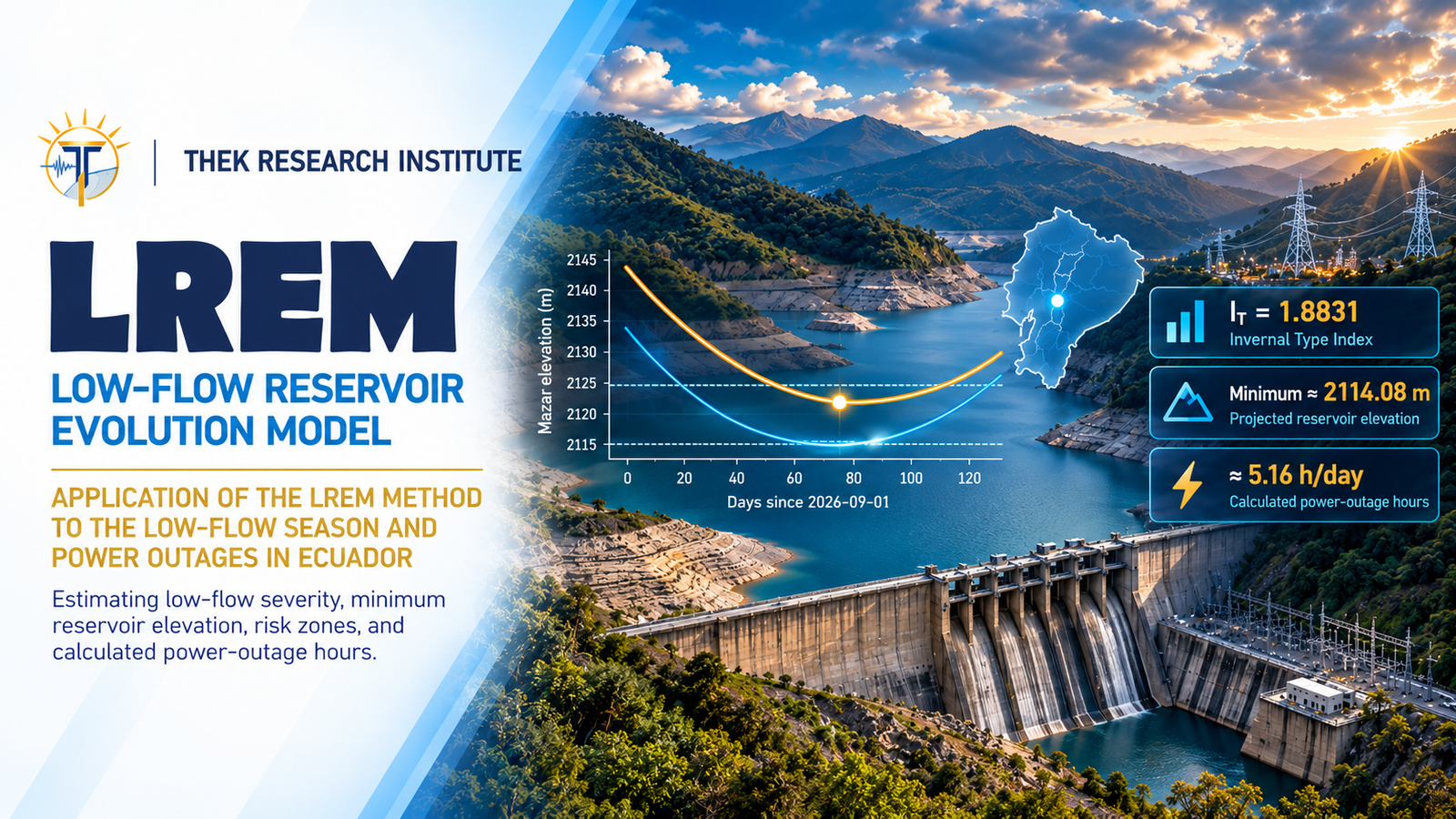
LREM describes the evolution of a regulating reservoir during a low-flow season and connects hydrological severity with an explicit reservoir-elevation trajectory and an empirical estimate of potential daily rationing hours. The development window uses real Mazar data from 2017–2025, while 2023 and 2024 provide direct verification cases and 2025 provides a stable reference condition.
Explores candidate relationships among observable variables: elevation–time, hours–time and hours–elevation representations.
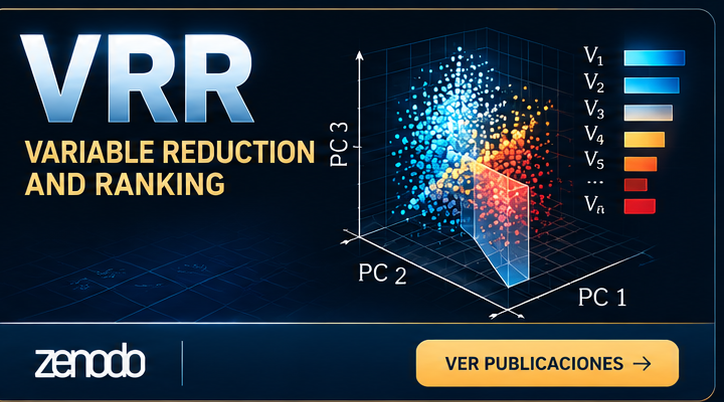
Reduces and ranks variables, coefficients and scales so the dominant structure of the reservoir problem becomes explicit.
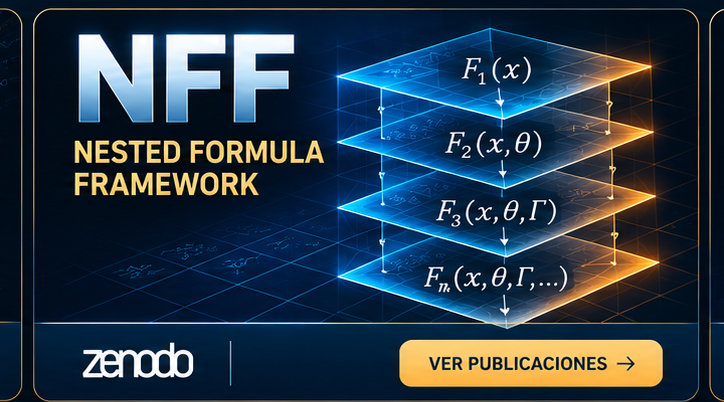
Reorganizes the reduced relations into a compact chain of linked equations that remains interpretable and reproducible.
The formulation keeps every stage visible. Inputs, transformations and outputs are explicit, making the method suitable for comparison, technical review and updating when new observations become available.
For the two hourly verification points, the mean absolute percentage difference is approximately 0.84%. In the 2026 application, the method separates the original LREM curve from a curve adjusted to actual 2026 observations. The original central scenario gives IT = 1.8831 and a minimum around 2114.08 m, while the adjusted curve yields a higher minimum of 2122.08 m and approximately 1.00 h/day at the adjusted minimum.

The complete LREM documentation is available here in English and Spanish. The Zenodo record is the open-science reference for the method and provides a persistent DOI for discovery, citation and reuse under its repository terms.
THEK Research Institute invites universities, research centers, engineering faculties, public institutions, companies, professionals and scientific teams to collaborate around LREM and the broader THEK methodological ecosystem.
Joint research, applied studies, academic cooperation, theses, publications and new LREM applications.
Specialized courses, seminars, master classes and technical training on LREM, FGET, VRR, NFF and related THEK methods.
Advisory services for reservoir modeling, low-flow analysis, risk scenarios, research design and methodological implementation.
Institutional and professional licensing opportunities for authorized use, implementation and development of THEK methodologies.
For scientific cooperation, courses, advisory services, institutional projects or licensing, contact THEK Research Institute at research@hithek.com.
Method: LREM — Low-Flow Reservoir Evolution Model
Creator: M.Sc. Marcelo Moncayo Theurer · THEK Research Institute
Zenodo record: zenodo.org/records/23145585
Canonical website: https://lrem.hithek.com/
Institutional contact: research@hithek.com
This page exposes standard scholarly metadata, DOI metadata, JSON-LD, hreflang, canonical links, robots directives, sitemap entries, AI-readable text files and direct PDF links so search engines, scholarly crawlers and AI systems can identify LREM as a named THEK scientific method and connect the website with its open Zenodo record.